

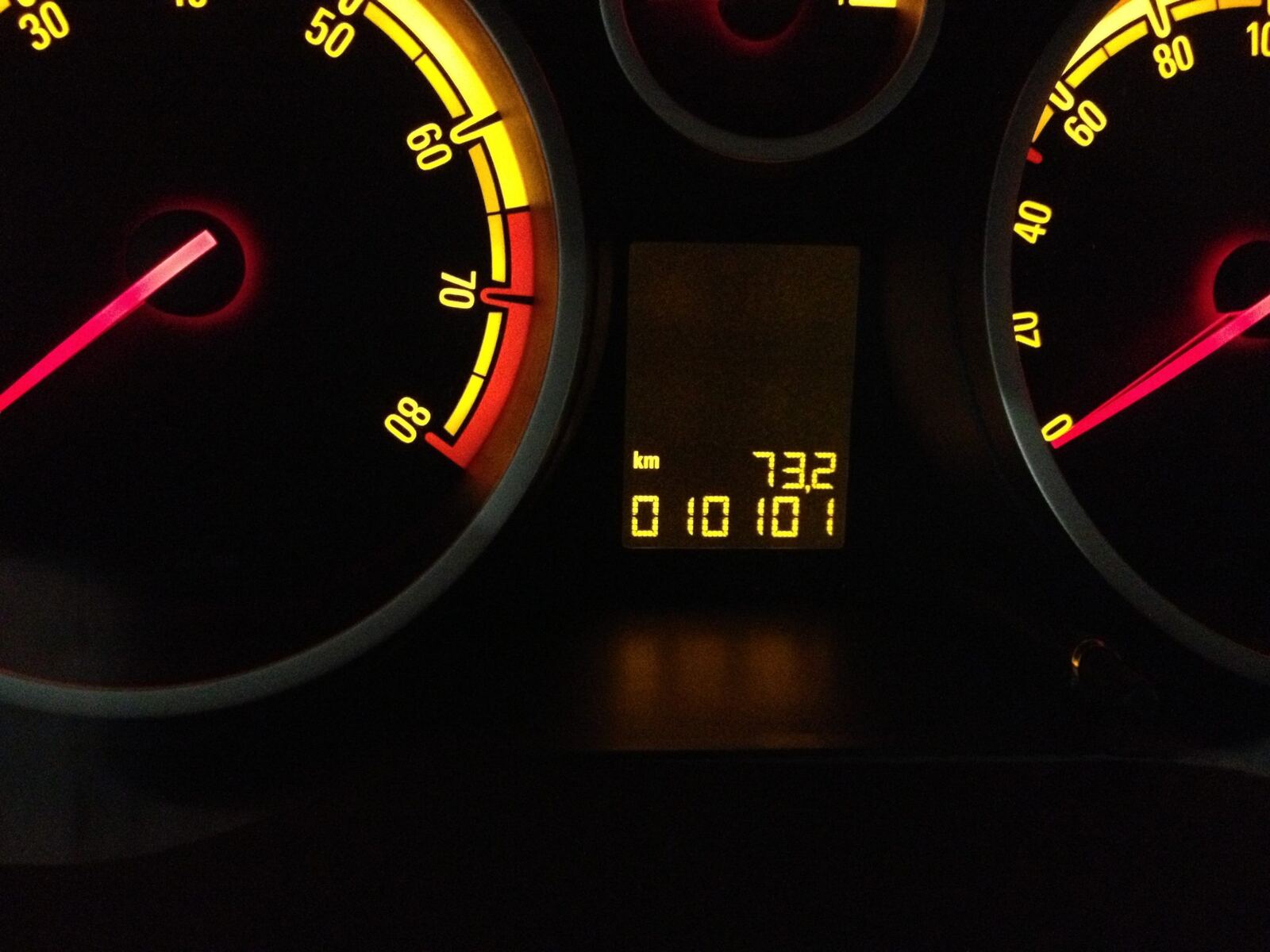
A high-mileage car is not a bad buy in itself. A well-maintained car with 120,000 miles can be more dependable than a neglected one with half that, and it will usually cost a good deal less. The mileage tells you which parts have had the most wear and what may be due soon; the service record and the MOT history tell you whether that wear has been looked after. Judge the car on all three, and on whether the price reflects the work it is likely to need.
What counts as high mileage
There is no fixed line, so the useful comparison is with other cars of the same age. These are the average odometer readings recorded at MOT tests in Great Britain in 2025, from our analysis of the DVSA's anonymised MOT data.
| Age of car | Average mileage at its MOT |
|---|---|
| 3 years | 27,742 |
| 5 years | 42,099 |
| 8 years | 65,682 |
| 10 years | 79,716 |
| 12 years | 91,010 |
| 15 years | 104,284 |
| 20 years | 111,271 |
On those figures a car covers a little under 8,000 miles a year in its first ten years, so a five-year-old car with 70,000 miles or a ten-year-old car with 130,000 is well above average. Our average car mileage by age tool gives the figure for any age, and for many individual makes and models, which matters because a diesel estate and a small petrol hatchback lead very different lives.
Why the miles matter less than the maintenance
Mileage measures how far a car has travelled, not how it was treated. Two things matter more.
How the miles were done. Long motorway journeys are easy on a car: the engine runs at a steady temperature and the clutch, brakes and suspension do little work. Short trips and town traffic are harder, and they stop a diesel's particulate filter from clearing itself. A company car with 30,000 motorway miles a year can be in better mechanical shape than a town runabout that has done a third of that.
Whether it was serviced on time. Oil changes at the right intervals are what let an engine reach high mileage. A complete service record, with invoices showing the mileage at each visit, is worth more on a high-mileage car than on any other. Our guide to verifying service history explains how to check it is genuine.
The parts that wear with mileage
Some parts are expected to need replacing as the miles build up. On a high-mileage car, either they have been done, and there should be an invoice, or they are coming, and the price should reflect it.
| Part | What to check |
|---|---|
| Timing belt (cambelt) | Many engines need it changed at a set mileage or age, whichever comes first. If it is due and there is no invoice, budget for it before you buy. Some engines have a chain instead |
| Clutch | Check the biting point on the test drive. A clutch that bites very high, slips under load or judders is near the end |
| Dual-mass flywheel | Common on diesels and some petrols. A rattle at idle or a knock when the clutch is let out can mean it is worn |
| Suspension | Bushes, ball joints, springs and dampers wear with distance. Listen for knocks over bumps and look for suspension advisories in the MOT history |
| Brakes | Discs and pads are routine items, but check they have been kept up |
| Turbocharger | Listen for whining or whistling, and look for blue smoke or a lack of power |
| Diesel particulate filter | Diesels used for short journeys can block their filter. A warning light, or a seller who mentions regular "regenerations", needs a closer look |
The manufacturer's service schedule, usually in the handbook or on the maker's website, gives the timing belt interval for that engine. Ask the seller when it was last changed and at what mileage.
Use the MOT history as a wear record
The MOT history is especially useful on a high-mileage car because it shows how the wear has been managed over years. Look for:
- Advisories that were dealt with. Worn brake discs advised one year and gone the next, with a receipt, shows an owner who fixed things.
- Advisories that keep returning. Suspension or corrosion notes three years running mean the work is still waiting to be done.
- A steady mileage line. A high mileage built up evenly is a car in regular use. A sudden change in the rate, or a reading lower than the one before, needs explaining.
Our guide to reading an MOT history goes through what to look for, and the free MOT check puts the whole record and the mileage chart on one page.
Check the mileage and MOT record
Every recorded reading since 2005, charted, with every advisory. Free.
Make sure the mileage is real
A high mileage is rarely faked, because nobody winds a clock forwards. The bigger risk on a high-mileage car is the opposite: one that has done 160,000 miles but shows 90,000. Compare the dashboard reading with the last MOT reading and its date, check that the service invoices climb in step with the MOT record, and look at the wear on the steering wheel, gear knob and driver's seat. Our guide to spotting a clocked car covers the signs in detail.
What a high mileage should do to the price
A high-mileage car should be noticeably cheaper than an average-mileage example of the same model and age, and the gap should cover any big jobs that are due. If the timing belt, clutch and tyres all need doing soon, add up what those will cost at a local garage and take it into account when you make an offer. A car with a recent timing belt, clutch and a thick file of invoices has had that money spent already, and is worth closer to the going rate.
Remember that a high-mileage car will also be worth less when you come to sell it, so it suits a buyer who plans to keep a car for several years and run it until it is tired.
When to walk away
Walk away, or at least get an independent inspection, if:
- there is no service history at all on a car well above average mileage;
- the timing belt is due or overdue and the seller will not move on price;
- the MOT history shows the same suspension or corrosion advisories for years with no sign of repair;
- the mileage record has a drop, a long unexplained gap or a reading that does not match the dashboard;
- the car smokes, knocks or has warning lights on.
Before you hand over money, run a full history check as you would on any used car. A high mileage is often a sign of a hard-working fleet or company car, and those are more likely to have had several keepers and, sometimes, outstanding finance or past insurance claims.
Common questions
Is 100,000 miles too much for a used car?
Not on its own. In the 2025 MOT figures the average car passed 100,000 miles at about 14 years old, and plenty of cars run well beyond that with regular servicing. What matters is whether the big jobs that fall due around that mileage, such as the timing belt and clutch, have been done or are reflected in the price.
Is a high-mileage diesel a good buy?
It can be, if it has been used the way diesels like: long journeys at steady speeds. A high-mileage diesel that did mostly motorway work is often in good health. One used for short trips is more likely to have particulate filter, injector or EGR valve problems, so ask how it was used and check for warning lights.
Are motorway miles better than town miles?
Generally, yes. Long steady journeys put less wear on the clutch, brakes and suspension than stop-start town driving, and they let a diesel's particulate filter clean itself. A high-mileage car with a history of long journeys can be in better shape than a lower-mileage car used for short trips.
Can I get a warranty on a high-mileage car?
Often, but many used car warranties have a mileage or age limit, and those that do not usually cost more. Read what is excluded: wear-and-tear items such as clutches and brakes are commonly left out, which are the parts most likely to need attention on a high-mileage car.
Written by James Parry
James Parry built Direct Car Check to make the official DVLA and DVSA record on any UK car free and easy to read. Each guide is written from the official sources it links to, and checked again when the rules change.
Last reviewed 15 November 2026. Contains public sector information licensed under the Open Government Licence v3.0. Header photo: Mickaël Gris via WordPress Photo Directory, CC0.